
A promising SaaS launch can lose momentum quickly if prospects cannot understand what has changed, who the product is for and why it matters to them.
That is why a strong SaaS product launch video needs to do more than announce a new feature or demonstrate an interface. Its job is to connect the product to a recognisable business problem and make the value clear enough for the audience to want to know more.
At Astor Film Productions, we have created video campaigns for technology businesses operating across logistics, warehouse management, IoT, smart-city infrastructure and other complex B2B environments. The products and audiences vary, but the communication challenge is often similar: taking something technically sophisticated and turning it into a story that is clear, relevant and commercially useful.
Our work with Transport Exchange Group, Helm WMS and Connexin shows how different that approach can look in practice. Some projects need to demonstrate a measurable commercial benefit. Others need to make an unfamiliar technology easier to understand, or show how software changes what happens in the real world.
What does a SaaS video actually need to achieve?
SaaS films are rarely at their strongest when they become a guided tour of every button, feature and integration. That might satisfy an internal product checklist, but it does not necessarily give a prospective buyer a reason to care.
Most buyers are thinking about the problem before they are thinking about the software. A warehouse manager may want greater visibility and control over operations. A courier business owner may be looking for more work and a more efficient way to manage it. A local authority considering connected infrastructure may want to understand how technology can improve services or make better use of data.
The feature set matters because it proves the product can deliver. It should not always be the starting point.
For us, the more useful starting point is to understand what changes for the customer. Once that is clear, the product can be introduced as the means of achieving that change rather than as a collection of functions that need to be explained one by one.
Start with the business problem, not the product demo
Before deciding how a SaaS film should look, it is important to establish what role it needs to play within the wider campaign.
A product launch designed to introduce a platform to a new market needs a different approach from a film intended to help a sales team explain a complex proposition. Content aimed at existing customers may need to encourage adoption of a new feature, while a customer case study is more likely to focus on proof and reassurance.
Understanding the audience, what they need to take away from the film and what action the business wants them to take gives the creative process something solid to work from.
This is why we approach technology video as a communication problem before treating it as a production problem. Cinematography, lighting, animation, interface design and locations all matter, but they work much harder when the underlying message is already clear.
Find the human value behind the software
One of the difficulties with marketing software is that the product itself often exists largely on a screen. Simply filming an interface can make an otherwise sophisticated platform feel surprisingly flat.
Our work with Helm WMS is a good example of how we approached that differently.
Helm provides warehouse management software, but rather than building the film around screen demonstrations, we placed the working warehouse at the centre of the story. The movement of stock, people, equipment and information provided the context for why the platform mattered.
A warehouse is a physical, fast-moving environment where small inefficiencies quickly have consequences. By showing that environment first, the software could be understood in terms of the structure, visibility and control it brought to the operation.
The visual treatment reflected that idea. Dynamic camera movement, controlled lighting and carefully planned sequences gave the campaign more pace than a traditional software explainer, while the interface remained part of the story rather than having to carry the whole film.
We also created social-first versions for channels including LinkedIn, Facebook and Instagram so that the production could support the wider campaign rather than existing only as a single hero asset.
It is a useful reminder that sometimes the most effective way to communicate software is to show what happens because of it.
Making complex technology easier to understand
Some technology presents an even greater storytelling challenge because there is very little physical product for the viewer to see.
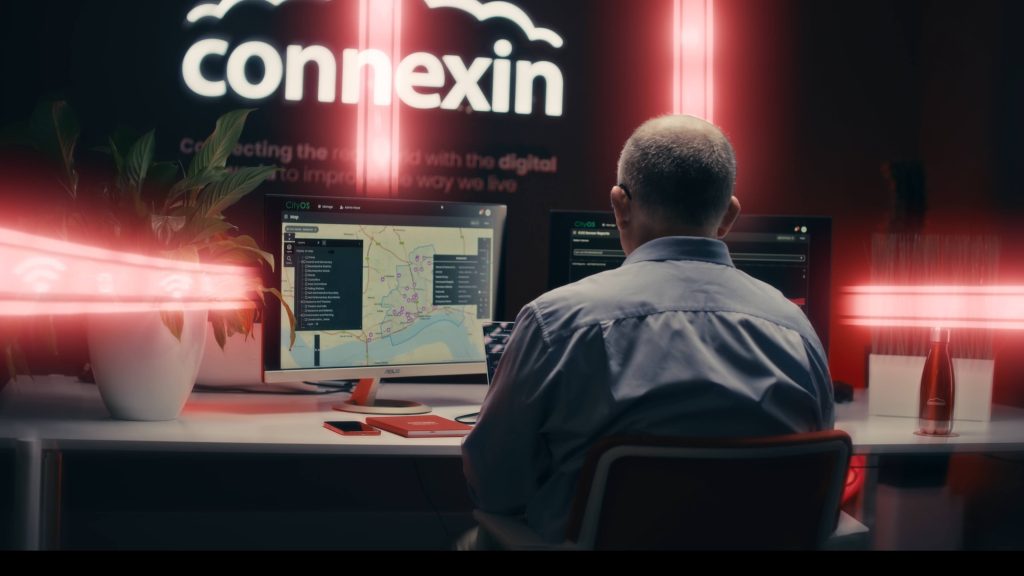
That was the case with our work for Connexin CityOS.
Smart-city infrastructure and Internet of Things technology can become technically dense very quickly. Much of the infrastructure also sits quietly in the background, which makes it difficult to communicate visually if the film relies too heavily on terminology or diagrams.
For the Connexin film, we grounded the technology in the city itself. Filming across real locations in Hull allowed the audience to see the physical environment first and understand the technology through the things it could connect, monitor and improve.
That approach gave an otherwise intangible proposition context. Instead of asking the viewer to understand the technical architecture before understanding the benefit, the film created a route into the subject through real places and recognisable applications.
For complex technology businesses, simplifying a message does not mean removing the sophistication from it. It means deciding which information the audience needs first and giving them a clear way into the story.

A strong message is more useful than a long feature list
Most SaaS platforms are capable of doing many things, but trying to communicate all of them in one film usually weakens the message.
A better approach is to identify the strongest commercial promise and build the narrative around it. That might be greater visibility, faster decision-making, improved control, easier collaboration or a more specific outcome tied to the customer’s operation.
The supporting features then provide proof rather than competing for equal attention.
A typical structure might move from the problem and its consequences into the solution, show enough of the product to make the promise credible, then finish with the outcome and next step. The exact treatment should still be shaped around the product and the audience.
Helm needed physicality and pace. Connexin needed scale and clarity. A customer case study needs a different kind of credibility again. The structure may be disciplined, but the creative treatment should not be formulaic.
Your interface should support the story
Product visuals are obviously an important part of many SaaS films, but there is a difference between showing software and helping someone understand it.
Raw screen recordings can quickly become overloaded. Menus, cursor movements, data and interface elements are all competing for attention while the viewer is also trying to follow the wider message.
We therefore treat interface sequences much like any other part of a production. The important information needs to be identified in advance and the viewer’s attention directed towards it.
That can mean isolating a particular interaction, simplifying what appears on screen, slowing down a key process or using motion graphics to guide the eye. In other cases, showing the outcome in the real world can communicate the point more effectively than spending another ten seconds inside the software.
UI animation and motion design can also give a technology film a more premium feel, particularly when the product needs to sit alongside live action. Their purpose, though, should be to improve clarity and create continuity rather than simply decorate the interface.
For more ambitious launch films, the strongest approach is often a combination of the human problem, the real-world environment and the software experience. That gives the audience more than one way to understand what the platform does.
The opening needs to earn attention
SaaS marketers are competing for attention across crowded feeds, inboxes, landing pages, events and sales conversations. A slow introduction can use up a surprising amount of the viewer’s patience before the proposition has even appeared.
That does not mean every SaaS film needs aggressive editing or a deliberately provocative opening. It means the first few seconds should have a clear purpose.
A recognisable frustration can work well. So can a strong product benefit, an unexpected visual moment or a concise statement that immediately frames the problem.
The right opening will also depend on where the film is being used. A 60 or 90-second hero film on a product page can afford to develop an idea differently from a 15-second paid social advert. Both can belong to the same campaign while being edited around very different viewing behaviour.
One production can create much more than one film
SaaS campaigns rarely live in one place, which is why we prefer to think about the wider content requirement before the shoot rather than treating additional versions as an afterthought.
A well-planned production can generate a flagship product or brand film alongside paid social edits, vertical versions, feature-focused content, customer stories, product demonstrations, sales enablement material, stills and a reusable bank of footage for future campaigns.
The value is not simply in having more deliverables. It is about creating assets for different moments in the buying journey.
A short paid advert may need to communicate one benefit immediately. The website film can go further. A customer case study can provide evidence once a prospect is actively considering the product, while a more detailed demonstration can help the sales team later in the conversation.
Planning those requirements before filming means the creative and production team can capture the right material for each use. Vertical framing can be considered on location, additional product interactions can be filmed deliberately and the edit can be structured so that shorter versions feel intentional rather than simply cut down from a widescreen master.
That was part of our approach with Helm, where dedicated social-first assets were built into the production rather than created as an afterthought.
Customer stories give product claims credibility
As a SaaS business becomes more established, the marketing challenge often shifts from explaining what the platform does to proving that it works for organisations similar to the prospect.
This is where customer case studies become particularly valuable.
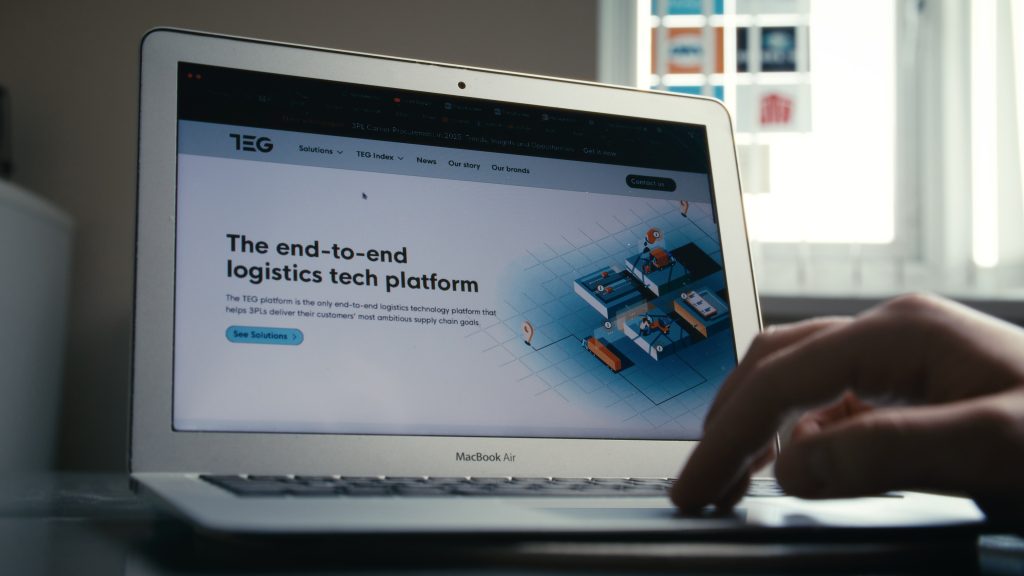
Our ongoing work with Transport Exchange Group, including its Courier Exchange and Haulage Exchange platforms, has involved creating customer-led stories around the businesses and operators using the technology in the real world.
Rather than asking the platform to make every claim itself, the customer can explain why they began using it, how it fits into their operation and what has changed as a result.
For a prospective buyer, that carries a different kind of weight. The product still needs a clear proposition, but the customer’s experience provides the proof behind it.
These films can then work across websites, paid campaigns, organic social, sales conversations and retargeting activity. They are particularly useful later in the buying journey, when a prospect understands the proposition but wants reassurance that the platform can work in a business like theirs.
Video works harder when it is part of the campaign
One of the clearest commercial examples from our own technology work came from campaign content produced for Transport Exchange Group.
The video was used as part of a targeted PPC campaign during the Black Friday period, with the wider campaign contributing to nearly £1 million in revenue.
It is important to put that result in context. The video was one part of the campaign. The offer, targeting, media strategy, landing experience and product all played their role.
That is precisely the point.
Video tends to be more commercially useful when it is built around the wider marketing activity rather than produced in isolation. The film needs to communicate the offer clearly, earn attention from the right audience and give that audience a reason to take the next step.
When those elements are aligned, video becomes part of a commercial system rather than simply a piece of creative content.
Measure the job the film was created to do
Views can be useful, particularly when awareness is the objective, but they rarely tell the complete story of a SaaS campaign.
A brand or launch campaign might be judged through reach, completion rate, engagement, branded search or traffic. Demand-generation content may be more closely linked to landing-page behaviour, enquiries, demo requests, trial starts and qualified opportunities.
For an existing customer campaign, the relevant measures could include feature adoption, upgrades or engagement. A customer case study may prove its value much further down the funnel by supporting a sales conversation or helping to reassure a buyer considering the platform.
This is particularly important in B2B technology, where the audience can be relatively small but commercially valuable. A film seen by 20,000 relevant decision-makers may be worth considerably more than content generating a much larger number of views from people who will never buy the product.
The measurement should follow the objective rather than forcing every piece of content to prove itself through the same metric.
Good SaaS films need input from beyond marketing
Some of the most useful information for a technology film often sits elsewhere in the organisation.
Sales teams hear the questions and objections that appear repeatedly in real conversations. Customer success teams understand what users value once the software is implemented. Product teams can explain what is genuinely distinctive about the platform and make sure technical claims remain accurate.
Bringing those perspectives into pre-production can make the final film considerably stronger, provided the process is managed properly.
Without a clear structure, stakeholder feedback can turn a focused message into a long list of competing priorities. Agreeing the core proposition, decision-makers and approval stages early gives people the opportunity to contribute without allowing the film to become a committee document.
This becomes even more important when the technology business operates in a regulated or complex environment where confidentiality, health and safety, accessibility, data handling or brand governance also need to be considered.
None of these things should become visible problems for the audience. Good production planning deals with them in the background so that the finished film can remain clear and focused.
Choosing a video production partner for SaaS
When choosing a video production partner for a SaaS or technology project, the important question is not simply whether they can make the product look good on screen. They need to understand what the product actually does, why customers buy it and which parts of the proposition matter most to the audience.
That also means being able to translate technical functionality into a clear commercial story without relying on internal terminology or feature lists. Depending on the project, the right approach might combine live action, product footage, customer interviews, animation and motion graphics, with different versions created for paid campaigns, websites, sales teams and social channels.
For more complex B2B technology projects, there is another consideration too: the production company needs to manage customers, internal stakeholders, locations, approvals and technical requirements without creating additional work for the marketing team.
Our own technology work has ranged from turning warehouse management software into a fast-moving cinematic campaign, to explaining smart-city IoT infrastructure across real locations and creating customer stories for established logistics platforms.
Those projects required different creative approaches because the businesses, products and communication challenges were different. That is why we do not begin with a predefined format and try to make every brief fit it.
Make the software relevant before making it impressive
There is no shortage of sophisticated technology. The harder marketing challenge is making an audience understand why a particular product matters to them.
For Helm, the answer was to place the working warehouse at the centre of the film and show the software in the context of the operation it helps manage.
For Connexin, it meant taking infrastructure that is largely invisible and connecting it to the physical city and real-world applications around it.
For Transport Exchange Group, it has meant combining campaign content with customer stories that show how technology fits into real courier and haulage businesses.
The platforms, audiences and creative treatments are different, but the principle behind them is consistent: understand the audience first, identify the problem or opportunity that matters to them, and build the film around the clearest expression of that value.
Production quality then has a purpose. It is there to make the story more engaging, more credible and easier to remember rather than simply making the software look impressive.
The strongest SaaS video is rarely the one that manages to show the most features. It is the one that leaves the audience with a clear understanding of why the product is relevant to them.
If you are planning a product launch, SaaS campaign or technology film, explore our SaaS and technology video production work or talk to Astor Film Productions about your next project.